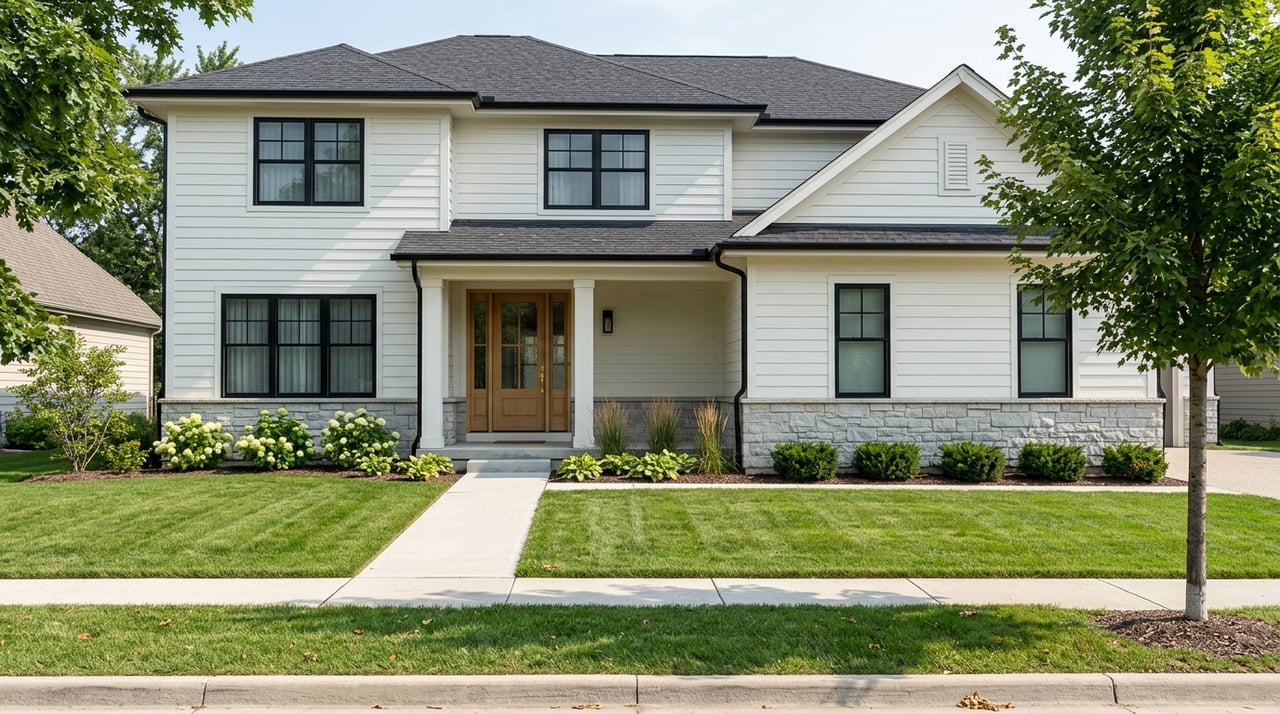
Buying your first home in Lakeville can feel exciting right up until you realize one big truth: the house is only part of the decision. The neighborhood you choose will shape your commute, your daily routine, your access to parks and trails, and the type of home you can realistically afford. If you are trying to narrow down where to focus in Lakeville, this guide will help you compare the city’s official planning districts, weigh your priorities, and choose an area that fits your life now and later. Let’s dive in.
Why neighborhood choice matters in Lakeville
Lakeville is a large suburban city that covers about 38 square miles, with an estimated population of 79,270 and more than 1,630 businesses. It is also heavily owner-occupied, with an owner-occupied rate of 87.8%. For you as a first-time buyer, that usually means comparing stable residential areas instead of renter-heavy pockets.
The housing mix also matters. Lakeville’s housing stock is dominated by single-family detached homes, which account for about 73% of all units, according to the city’s housing needs assessment. That is one reason many first-time buyers need to decide early whether they are aiming for a townhome, condo, or starter single-family home.
Price expectations are another key part of the neighborhood decision. Recent citywide market measures all point to a market around the half-million-dollar range, even though the numbers vary by source. That can make location, home type, and monthly payment strategy especially important when you are building your search plan.
Start with Lakeville’s seven districts
One of the easiest ways to make sense of Lakeville neighborhoods is to use the city’s official planning districts. These seven districts were created based on land use patterns, utility service boundaries, and physical barriers. While subdivision names may change from one listing to another, these districts give you a more reliable framework for comparing areas.
District 1: Northwest Lakeville
District 1 includes the I-35, Kenwood Trail, and Orchard Lake area in northwest Lakeville. The city describes it as a mix of low-density residential, commercial areas along I-35, rural residential pockets, and natural features like rolling topography, wetlands, tree cover, and lakes.
For many first-time buyers, this area may appeal if you want mature landscaping and quicker freeway access. It can be a smart fit if you value established surroundings more than a fully uniform new-construction look.
District 2: North Lakeville
District 2 sits in north central Lakeville between I-35 and Cedar Avenue. It is almost fully developed and remains mostly low density, with target areas near the I-35 and County State Aid Highway 50 park-and-ride and planned Cedar BRT stations.
If you want an established neighborhood with flexible commuting options, District 2 may deserve a closer look. It can be a practical choice when you want a balance between residential stability and access to major travel routes.
District 3: Northeast Lakeville
District 3 is east of Cedar Avenue and is primarily low-density residential. It includes newer east-side development patterns, including the Spirit of Brandtjen Farm buildout, along with the North Creek Manufactured Home Park and areas tied to planned future BRT stations.
This district may be worth considering if you are drawn to newer housing patterns on the east side. You may be trading some commute convenience for a newer neighborhood feel, depending on where you work and how often you travel.
District 4: Central Lakeville
District 4 covers central Lakeville east of I-35 and south of 185th Street. It includes downtown Lakeville, Lake Marion, Heritage Commons, Lakeville South High School, Kenwood Trail Middle School, and a wide network of parks and greenway corridors.
For first-time buyers, this is one of the most versatile districts to explore. It combines low-density neighborhoods with townhomes and offers a central location close to city amenities, recreation, and downtown destinations.
District 5: Cedar Corridor
District 5 follows the Cedar Avenue corridor from Glacier Way to 210th Street. The city identifies this area for planned mixed residential and commercial growth tied to future transit, with higher planned densities near corridor and station areas.
If you are open to a neighborhood that is still evolving, this district may offer opportunity. It can be especially useful to watch if you want to compare newer housing options, future redevelopment, and transit-oriented growth patterns.
District 6: I-35 and CSAH 70 Corridor
District 6 runs along the southern edge of Lakeville from I-35 toward Farmington. It is dominated by commercial, office park, industrial, and airport uses, though the city also anticipates some workforce housing west of I-35.
This district is less of a classic residential area and more of an employment and commute corridor. For most first-time buyers, it makes more sense as a location factor than a traditional neighborhood destination.
District 7: Southwest Lakeville
District 7 is mostly rural because of utility constraints and existing land use patterns. It includes rural residential, agricultural, and hobby-farm uses, with low density of up to one dwelling unit per ten acres.
If you want more space and do not mind being farther from everyday suburban services, this district may stand out. It is usually the clearest fit for buyers who prioritize land and privacy over convenience to errands or newer suburban amenities.
Match the district to your daily routine
The right neighborhood is not always the one with the newest homes or the most buzz. It is usually the one that supports your real life, especially on a Tuesday morning when you are heading to work, running errands, or trying to get outside after dinner.
In Lakeville, commute planning often comes down to I-35 access versus Cedar Avenue access. Districts 1, 2, 5, and 6 are closest to I-35 or the corridor systems that feed it, while Districts 3 and 5 connect more directly to Cedar Avenue patterns. District 4 offers central access to downtown and city services, while District 7 is more rural and typically less convenient for frequent errands.
Transit can also be part of the picture for some buyers. Metro Transit says Kenrick Avenue Park & Ride is just south of I-35 exit 86, offers free parking for up to 750 vehicles, and is served by Route 467 with express service to downtown Minneapolis. Route 477 also serves Lakeville Cedar Park & Ride from the Apple Valley Transit Station.
Think about housing type early
One of the biggest mistakes first-time buyers make is choosing neighborhoods before deciding what type of home fits their budget and lifestyle. In Lakeville, that can lead to frustration because detached homes make up such a large share of the housing stock.
The city reported significant new housing activity in 2025, including 229 single-family permits, 118 detached townhome permits, 201 attached townhome permits, and three apartment projects totaling 73 units. Through March 2026, the city had already issued 63 single-family permits and 97 townhome permits.
That is helpful, but it does not mean every district will offer the same options. The city’s housing study notes that new attached housing is still relatively limited compared with detached homes, and examples in the study showed townhomes in the lower-to-mid $400,000s and single-family homes commonly in the $400,000s to $700,000s and above. Those examples were based on late 2022 subdivision snapshots, so they are best used as a directional guide rather than a current price sheet.
Compare amenities that affect daily life
A neighborhood can look great on paper and still feel wrong if it does not support how you actually live. That is why it helps to compare not just homes, but also the places you are likely to use every week.
Lakeville has more than 100 parks, conservation areas, and special-use facilities, along with about 140 miles of asphalt trails and greenways. That gives you a lot of flexibility if access to outdoor recreation is important to you.
Several amenity anchors can help you compare different parts of the city:
- Downtown Lakeville for local shops and the Lakeville Area Arts Center
- East Community Park for trails, fishing, tennis, softball, and playgrounds
- Grand Prairie Park for pickleball, a splash pad, trails, and larger playfields
- Lake Marion Greenway for a growing trail connection between downtown Lakeville and Ritter Farm Park
If parks, trails, and community spaces are a big part of your routine, these features can become strong tie-breakers between two otherwise similar areas.
Don’t assume school attendance by neighborhood name
If school attendance areas matter to your home search, verify them by property address before you make assumptions. Lakeville Area Schools serves more than 12,000 students and includes nine elementary schools, three middle schools, and two high schools.
Because district boundaries can change over time, a subdivision name or casual description is not enough. The district says buyers should confirm a specific address through its interactive boundary map rather than relying on neighborhood labels alone.
A simple Lakeville neighborhood worksheet
When you tour homes or compare listings online, it helps to score each area using the same set of priorities. A simple worksheet can keep you focused when emotions start to take over.
Use these questions as your guide:
- How easy is the commute from this area, especially to I-35 or Cedar Avenue?
- What home types are realistic here: detached, townhome, condo, or larger-lot rural property?
- Does the monthly payment fit your budget, including HOA dues if they apply?
- Have you verified the school attendance area by address if that matters to you?
- How close are parks, trails, and everyday amenities?
- Are you comfortable with possible new-construction traffic, road work, or future redevelopment?
- Would you rather buy in an established area with mature trees or a newer area with modern layouts and lower-maintenance living?
These questions can help you move from “Which neighborhood sounds nice?” to “Which neighborhood fits my life?” That shift often leads to better decisions.
How to narrow your search with confidence
If you are feeling torn between several parts of Lakeville, that is normal. Most first-time buyers are balancing budget, commute, home style, and future resale all at once.
A smart starting point is to narrow your search into two or three district types rather than chasing every new listing across the city. For example, you might compare an established area in District 2 or 4 against a newer-growth pattern in District 3 or 5. That side-by-side approach usually makes trade-offs easier to see.
The goal is not to find a perfect neighborhood. The goal is to find the area that gives you the best overall fit for your budget, routine, and long-term plans. When you get clear on those priorities first, the right Lakeville neighborhood becomes much easier to spot.
If you want help sorting through Lakeville neighborhoods, comparing commute patterns, and finding the right first home for your budget, Ann Kent offers the kind of local guidance that can make the process feel a lot more manageable.
FAQs
Which Lakeville district is best for first-time buyers who want an established neighborhood?
- Districts 2 and 4 often stand out for buyers who want more established neighborhood patterns, with District 2 offering commute flexibility and District 4 offering a central location with parks, downtown access, and a mix of housing types.
Which Lakeville areas may work best for first-time buyers who want newer housing?
- District 3 and District 5 may appeal more if you want newer east-side development patterns or areas planned for future mixed residential growth.
What should Lakeville first-time buyers compare when choosing a neighborhood?
- Focus on commute routes, housing type, monthly payment, HOA costs if applicable, verified school attendance area, park and trail access, and your comfort level with future development or construction activity.
Are townhomes and condos easy to find in Lakeville for first-time buyers?
- Lakeville continues to add townhome units, but the city’s housing stock is still dominated by detached homes, so attached options may be more limited depending on timing and location.
How can Lakeville buyers verify a school attendance area for a home?
- The safest approach is to verify the specific property address with Lakeville Area Schools’ boundary tools, since attendance areas can change and should not be assumed from a neighborhood name alone.